Austin’s ecommerce ecosystem is growing quickly, driven by DTC brands, technology retailers, consumer accessories, and fast-scaling fulfillment operations. As order volume increases, many businesses discover that shipping delays are not caused by labor shortages alone. Instead, the real bottleneck is often the warehouse layout itself.
A high-performing e-commerce warehouse setup Austin businesses can rely on is built around speed, movement, and scalability. Rather than treating storage as the main priority, the most efficient layouts are designed to shorten pick paths, improve packing flow, and make better use of vertical cubic space. As a result, order accuracy improves, labor pressure decreases, and same-day shipping targets become easier to achieve.
Moreover, warehouse setup decisions made early can directly influence long-term profitability. A warehouse that supports fast fulfillment today should also remain flexible enough to handle future SKU growth, seasonal spikes, and workflow changes without forcing a costly relocation.
Why E-commerce Warehouse Setup in Austin Requires a Different Strategy
Austin warehouses serving ecommerce brands operate under very different conditions compared to traditional bulk storage facilities. Because e-commerce orders are typically smaller, faster-moving, and more frequent, the layout must support constant product movement rather than static pallet storage.
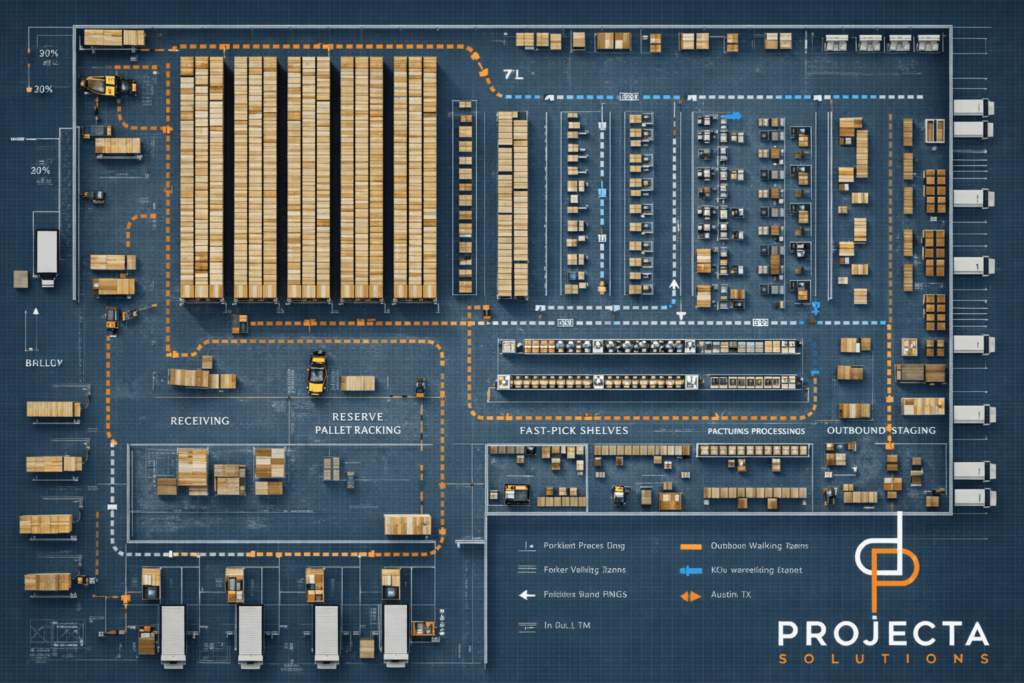
For this reason, the most effective warehouse design Austin TX strategies begin with order flow analysis. Receiving, reserve storage, active pick zones, packing, returns, and outbound staging should all follow a logical physical sequence. Consequently, inventory can move through the facility with fewer touchpoints and less unnecessary travel.
In addition, Austin’s rising warehouse lease costs make storage density a major operational priority. Therefore, businesses that fail to use vertical racking, mezzanine systems, or fast-pick zones often lose both speed and profitability over time.
The Best Warehouse Layout for Faster Fulfillment
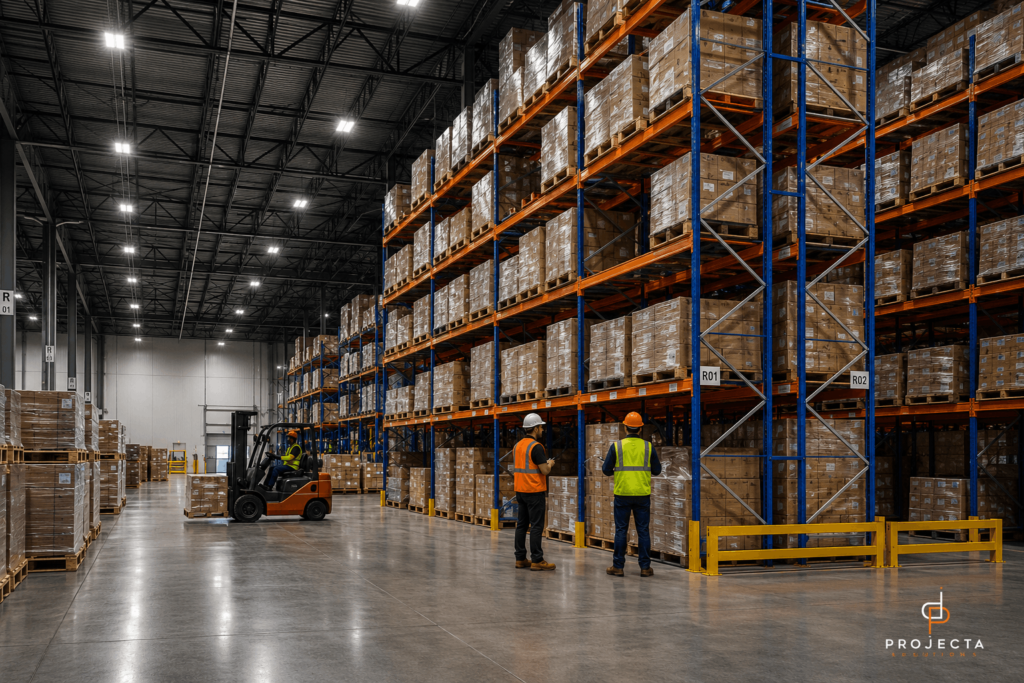
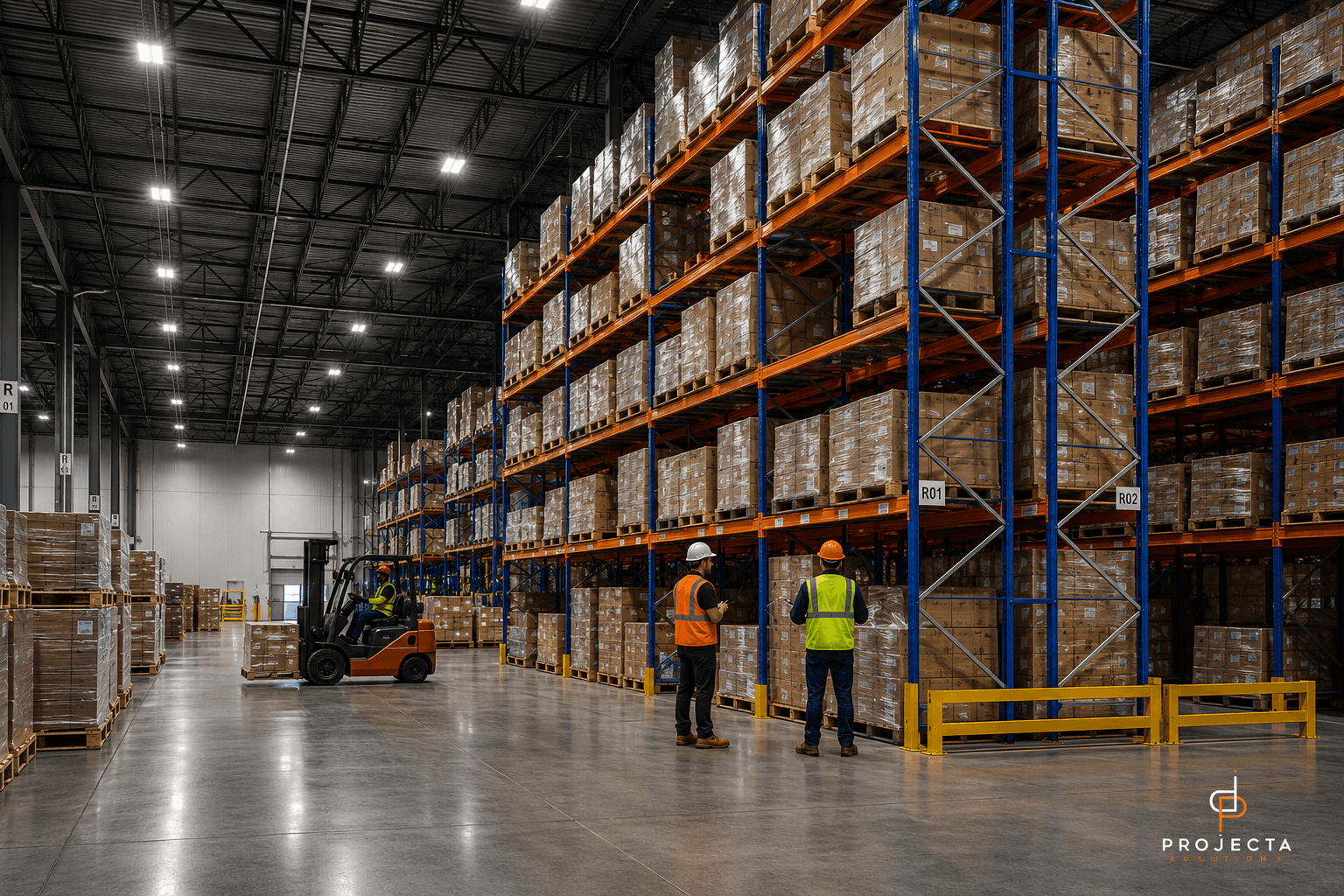
The best e-commerce warehouse setup Austin brands should implement starts with a clear understanding of order velocity. Fast-moving SKUs should always be positioned near packing stations, while reserve inventory can be stored vertically in pallet racking systems.
Fast-Pick Zones for High-Velocity SKUs
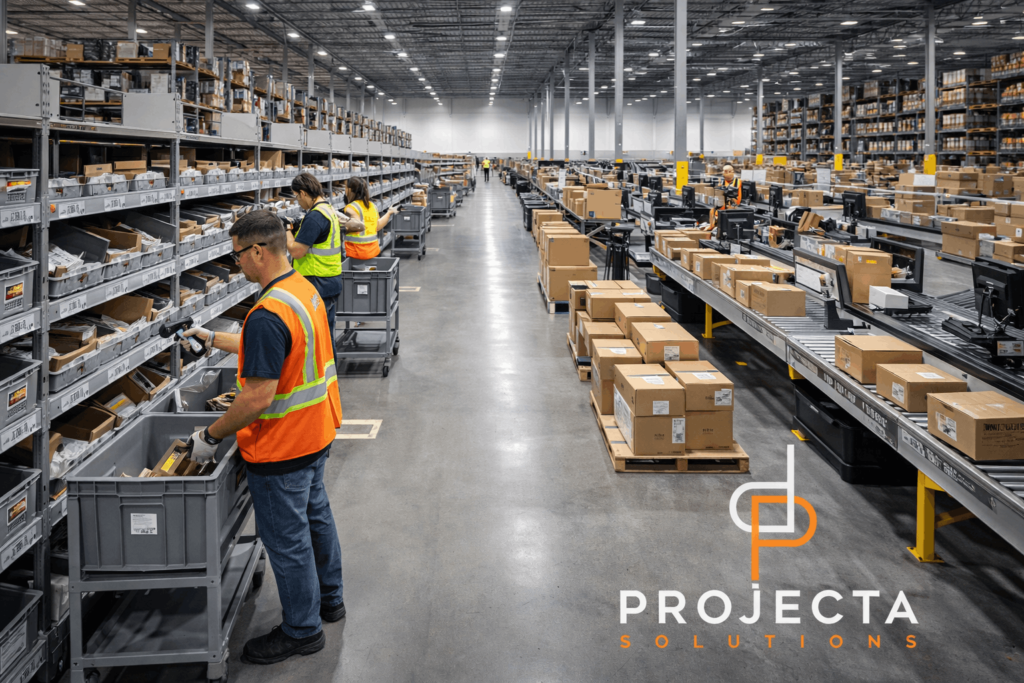
First, fast-pick shelving or carton flow racks should be placed within the shortest walking distance of the pack-out area. This setup significantly reduces picker fatigue and increases orders processed per hour. In many e-commerce operations, this single improvement can produce immediate throughput gains.
Reserve Storage and Replenishment Logic
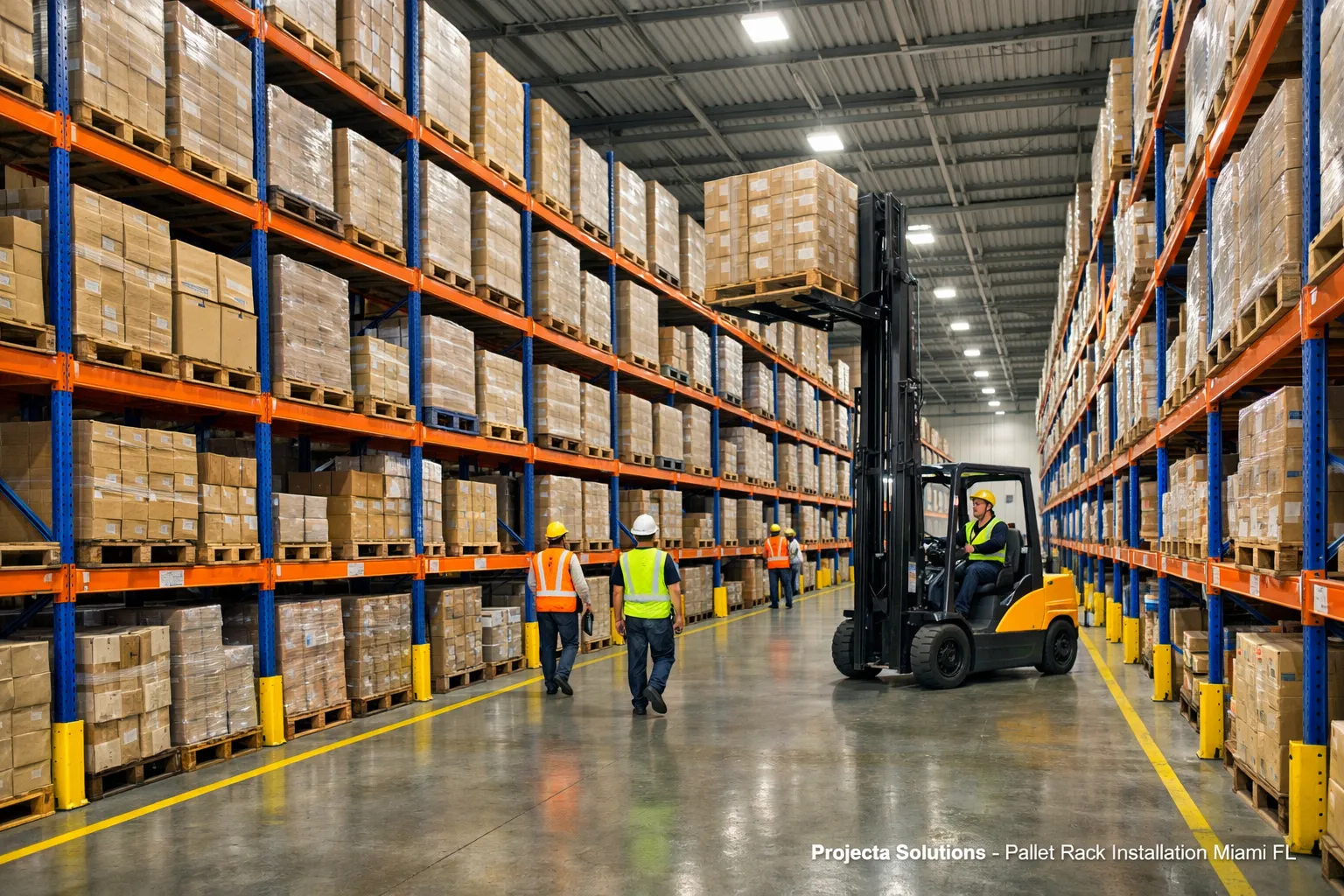
Meanwhile, slower-moving or bulk replenishment stock should be kept in selective pallet racking above or behind active picking zones. This ensures that replenishment teams can restock without interfering with live picking workflows. As a result, congestion is reduced, and order fulfillment remains consistent during peak periods.
Dedicated Packing and Outbound Lanes
Finally, outbound staging should sit directly adjacent to packing stations and dock doors. This placement minimizes double handling and shortens the time between completed picking and shipment dispatch. Consequently, shipping cut-off times become easier to meet.
Common Problems Caused by Poor E-commerce Warehouse Design
Many Austin businesses initially assume slow fulfillment is caused by labor inefficiency. However, the real issue is often poor layout logic.
For example, if pickers repeatedly cross paths with replenishment teams, congestion increases and mis-picks become more common. Similarly, when fast-moving SKUs are stored too far from packing stations, labor costs rise because every order requires additional walking time.
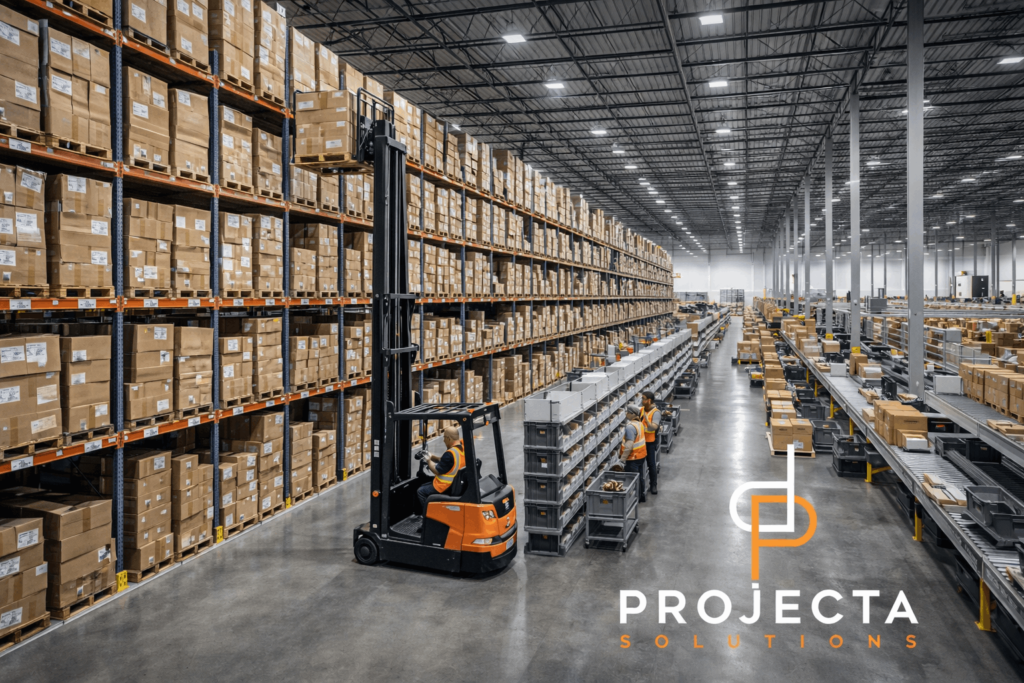
Furthermore, poor use of vertical space often forces businesses to expand too early. Instead of relocating, a smarter fulfillment center layout Austin strategy can often unlock significant additional capacity within the same footprint.
These problems become especially visible during Q4, promotional campaigns, and product launches. Therefore, identifying layout inefficiencies before seasonal demand spikes is critical for maintaining service levels.
How Better Warehouse Design Improves E-commerce Profitability
A better warehouse layout does more than improve speed. It directly affects profitability.
Shorter pick routes reduce labor hours per order. Better slotting logic lowers error rates and reduces returns caused by incorrect shipments. At the same time, optimized vertical storage delays the need for additional leased space.
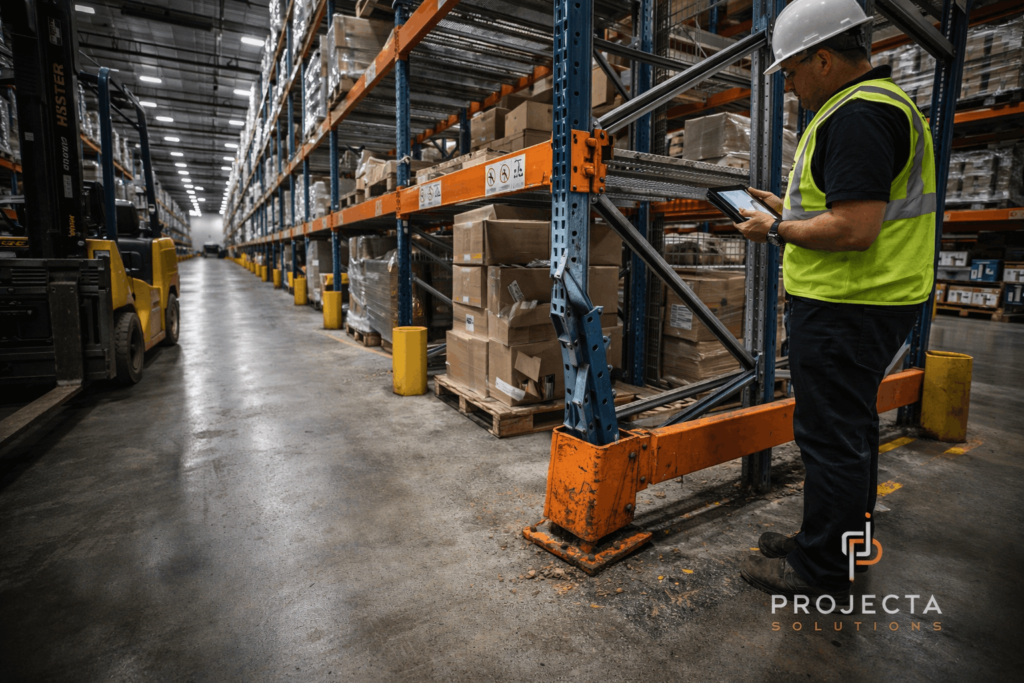
Additionally, a professionally planned warehouse layout optimization Austin strategy improves forklift movement and aisle safety. This reduces damage risk, supports OSHA-aligned traffic flow, and helps maintain cleaner operations.
Because Austin’s ecommerce brands often scale rapidly, designing for growth is equally important. A warehouse that performs well at 500 orders per day should still support 2,000 orders per day without major workflow disruption.
Why Choose Projecta Solutions
Warehouse Engineering Built for Throughput
Projecta Solutions specializes in e-commerce warehouse setup Austin companies need for faster fulfillment and scalable growth. Our approach combines warehouse engineering, pallet rack system planning, slotting optimization, and workflow design into one turnkey execution model.
Built Around Growth, Not Just Storage
Unlike generic rack installers, Projecta Solutions focuses on how inventory flows from receiving to shipment. Consequently, every design decision supports higher throughput, improved accuracy, and future-ready scalability.
Austin-Focused Local Expertise
Because Austin’s ecommerce market is growing rapidly, local fulfillment operations need layouts that balance storage density with order speed. Projecta Solutions helps businesses build layouts that support both today’s demand and tomorrow’s expansion.
Get a Free E-Commerce Warehouse Layout Review in Austin
If your operation is experiencing slow pick rates, pack-station backups, or storage constraints, the current layout may be limiting growth. In many cases, a workflow redesign can solve these issues without increasing labor headcount.
Therefore, now is the ideal time to evaluate your e-commerce warehouse setup Austin strategy before seasonal demand or SKU expansion creates bigger bottlenecks.
Contact Projecta Solutions today for a free warehouse layout consultation and custom fulfillment workflow review in Austin.
Our team will help identify wasted movement, underused vertical space, and faster fulfillment opportunities designed for long-term scalability.
Frequently Asked Questions
What is the best e-commerce warehouse setup?
The best setup places fast-moving SKUs closest to packing, uses vertical reserve storage efficiently, and separates replenishment from live picking. As a result, picker travel time decreases and order speed improves.
Why is warehouse design important for e-commerce?
Warehouse design directly affects labor productivity, pick speed, storage density, and order accuracy. Therefore, a smarter layout improves both customer satisfaction and profitability.
How can I increase warehouse capacity without moving?
In many cases, capacity can be increased through vertical pallet racking, mezzanine systems, and better slotting logic. Consequently, businesses can delay expansion costs.
Does Projecta Solutions provide warehouse setup services in Austin?
Yes. Projecta Solutions provides warehouse design in Austin TX, ecommerce warehouse setup, pallet rack installation, workflow optimization, and turnkey execution support for Austin fulfillment centers.