Modern warehouses are no longer simple storage spaces. They function as critical hubs for inventory management, order fulfillment, and distribution. As e-commerce growth and supply chain demands increase, businesses must ensure their warehouse facilities operate efficiently, safely, and at maximum capacity.
An inefficient warehouse layout can lead to wasted space, longer travel distances for workers, slower order processing, and higher operational costs. For this reason, many companies rely on professional warehouse design consultants to plan and optimize their storage and workflow systems.
Companies across Texas increasingly turn to experienced service providers to improve warehouse efficiency. Projecta Solutions provides warehouse design and layout consulting services that help businesses create organized, scalable, and efficient storage facilities. Through careful planning, facility analysis, and workflow optimization, the company supports warehouses and distribution centers in improving productivity and storage capacity.
This guide explains how warehouse design consulting works, why layout planning matters, and how businesses can benefit from professional warehouse optimization services.
What Does a Warehouse Design Consultant Do?
A warehouse design consultant helps businesses plan and organize warehouse facilities to improve operational performance. Instead of simply installing racks or shelving, consultants analyze the entire warehouse environment to design systems that support efficient storage and product movement.
Professional consultants typically begin with a detailed facility assessment. This evaluation includes examining building dimensions, storage capacity, equipment usage, and inventory handling processes. By understanding how products move through the warehouse, consultants can identify inefficiencies and develop a layout that improves workflow.
Key responsibilities of a warehouse design consultant often include:
- Analyzing facility structure and available storage space
- Evaluating inventory flow and operational processes
- Recommending storage systems and racking configurations
- Designing efficient aisle layouts and equipment pathways
- Improving order picking and shipping operations
- Planning future expansion capacity
A professional warehouse design company in Texas combines operational expertise with industry knowledge to create layouts that balance storage density with accessibility and safety. The result is a warehouse that supports faster operations and improved inventory management.
Warehouse Layout Planning Services Explained
Warehouse layout planning is one of the most important steps in creating an efficient facility. A poorly designed layout can cause congestion, inefficient workflows, and safety hazards.
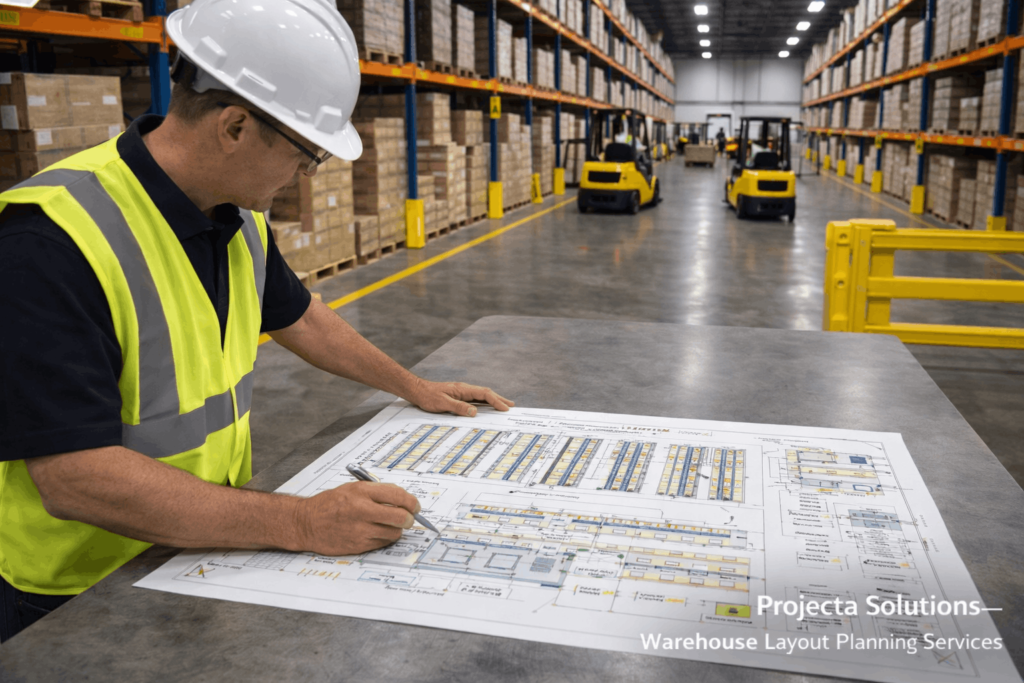
A warehouse layout consultant focuses on organizing the physical structure of the warehouse so that inventory moves smoothly from receiving to storage and eventually to shipping. Every area of the warehouse must be positioned strategically to support efficient operations.
Professional warehouse layout planning services typically include several design steps.
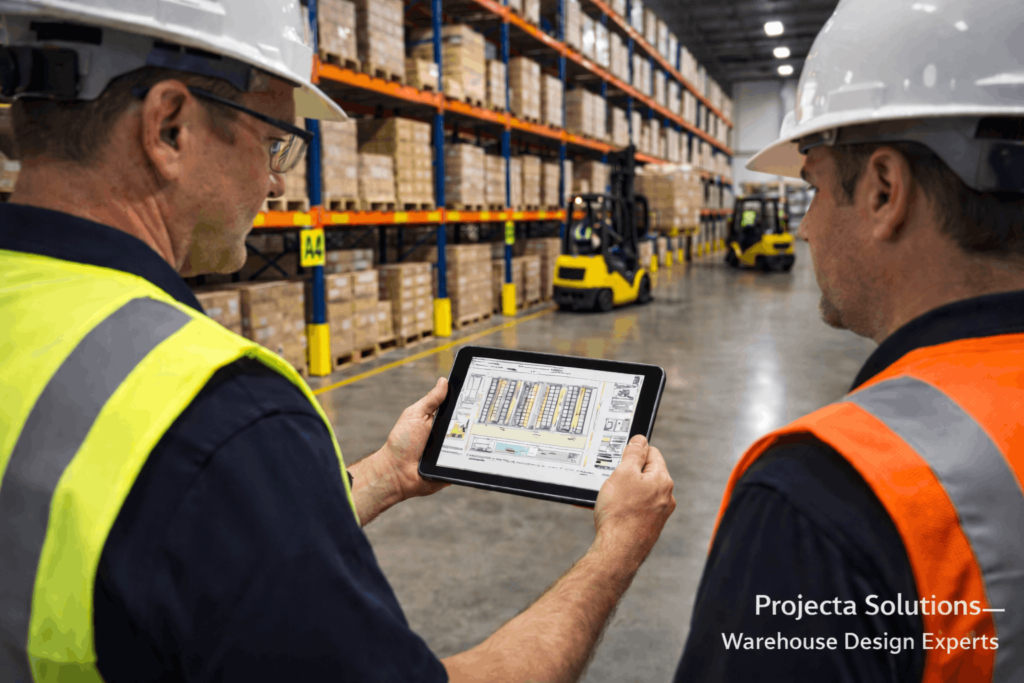
Facility Mapping and Layout Analysis
The first step involves mapping the building structure, including wall positions, columns, dock doors, and floor space. This process allows consultants to understand the physical constraints of the facility.
Storage Zone Planning
Consultants identify where different types of products should be stored. High-volume inventory is usually placed closer to shipping areas to reduce travel time during order fulfillment.
Aisle Configuration
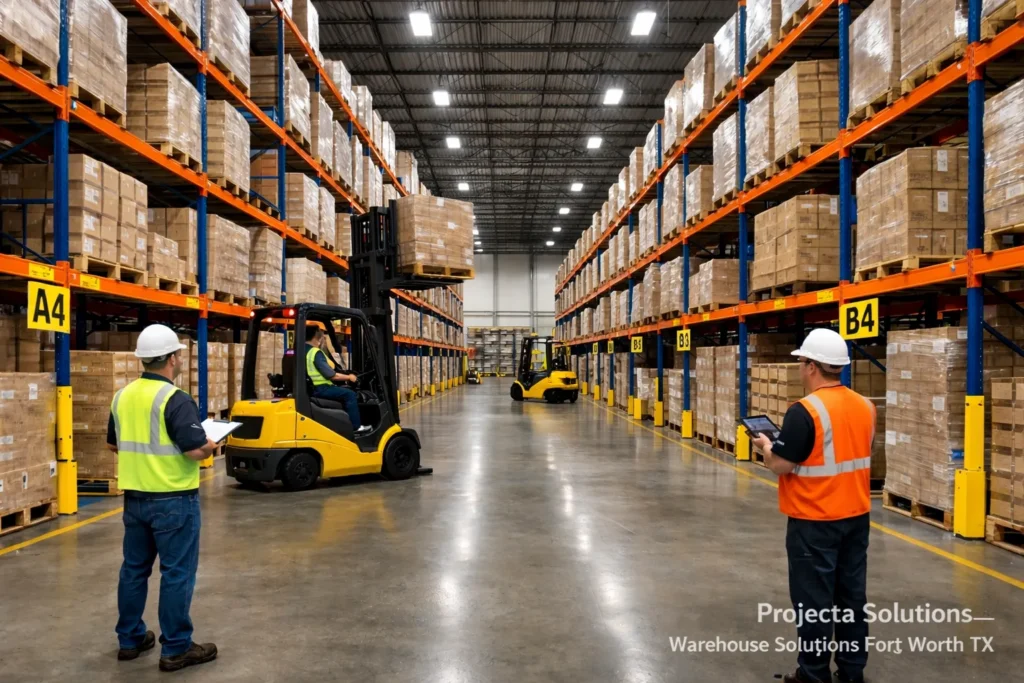
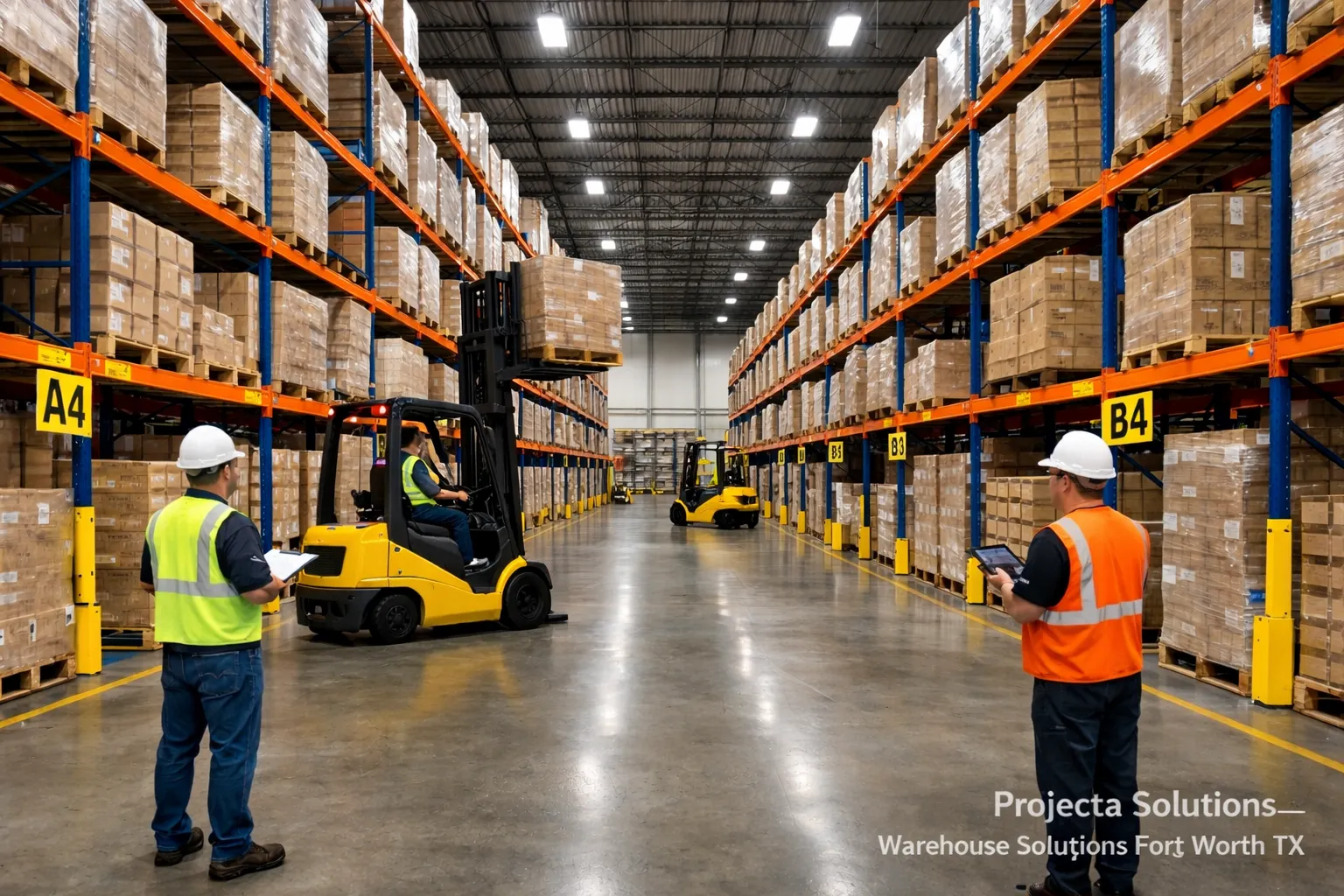
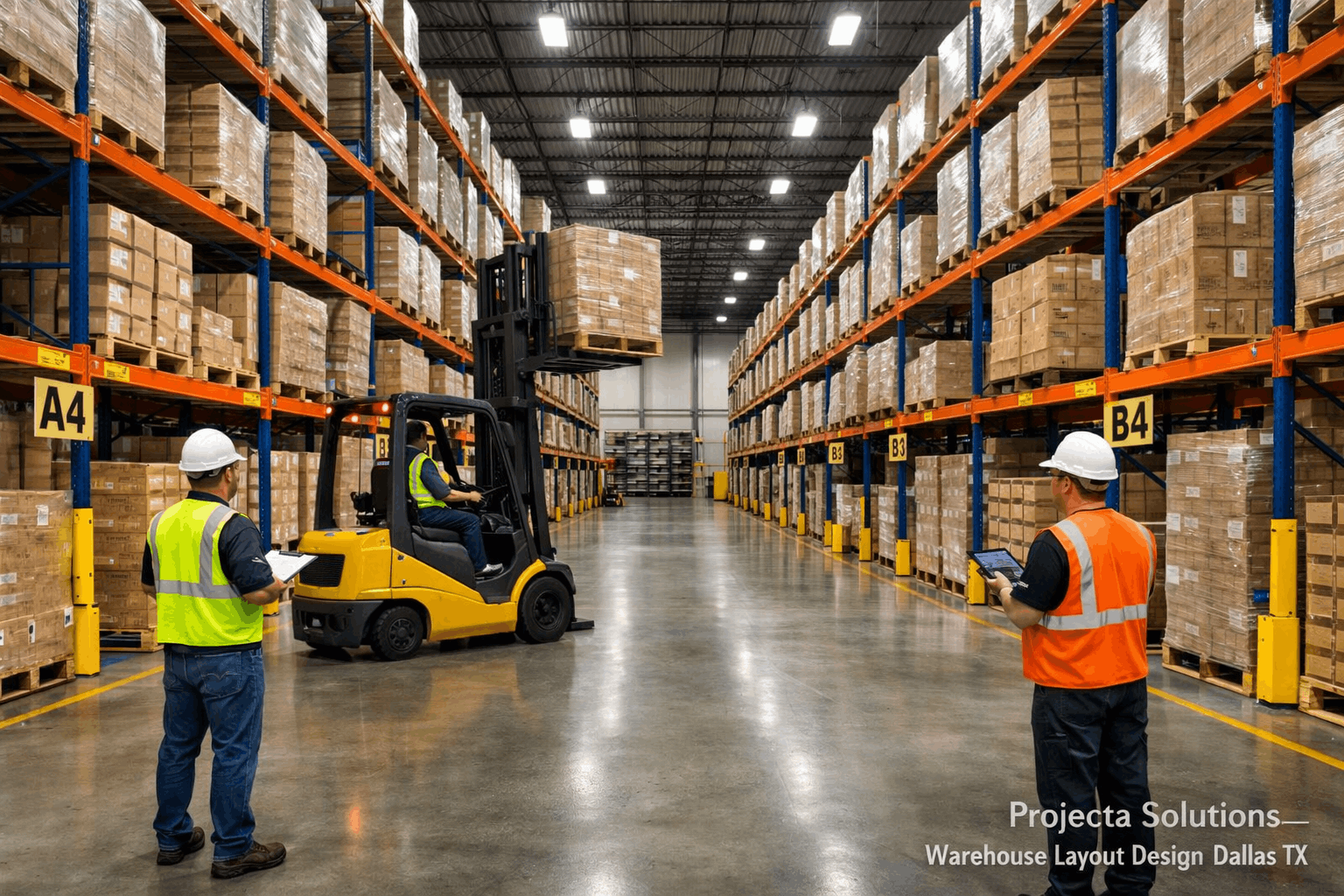
Forklift aisles must be designed to allow safe and efficient equipment movement. Proper aisle spacing prevents congestion and supports faster product retrieval.
Receiving and Shipping Areas
Efficient layouts ensure that receiving docks, staging zones, and shipping areas work together seamlessly to support continuous product flow.
When these elements are designed correctly, warehouses experience significant improvements in productivity and operational efficiency.
Warehouse Space Planning and Storage Design
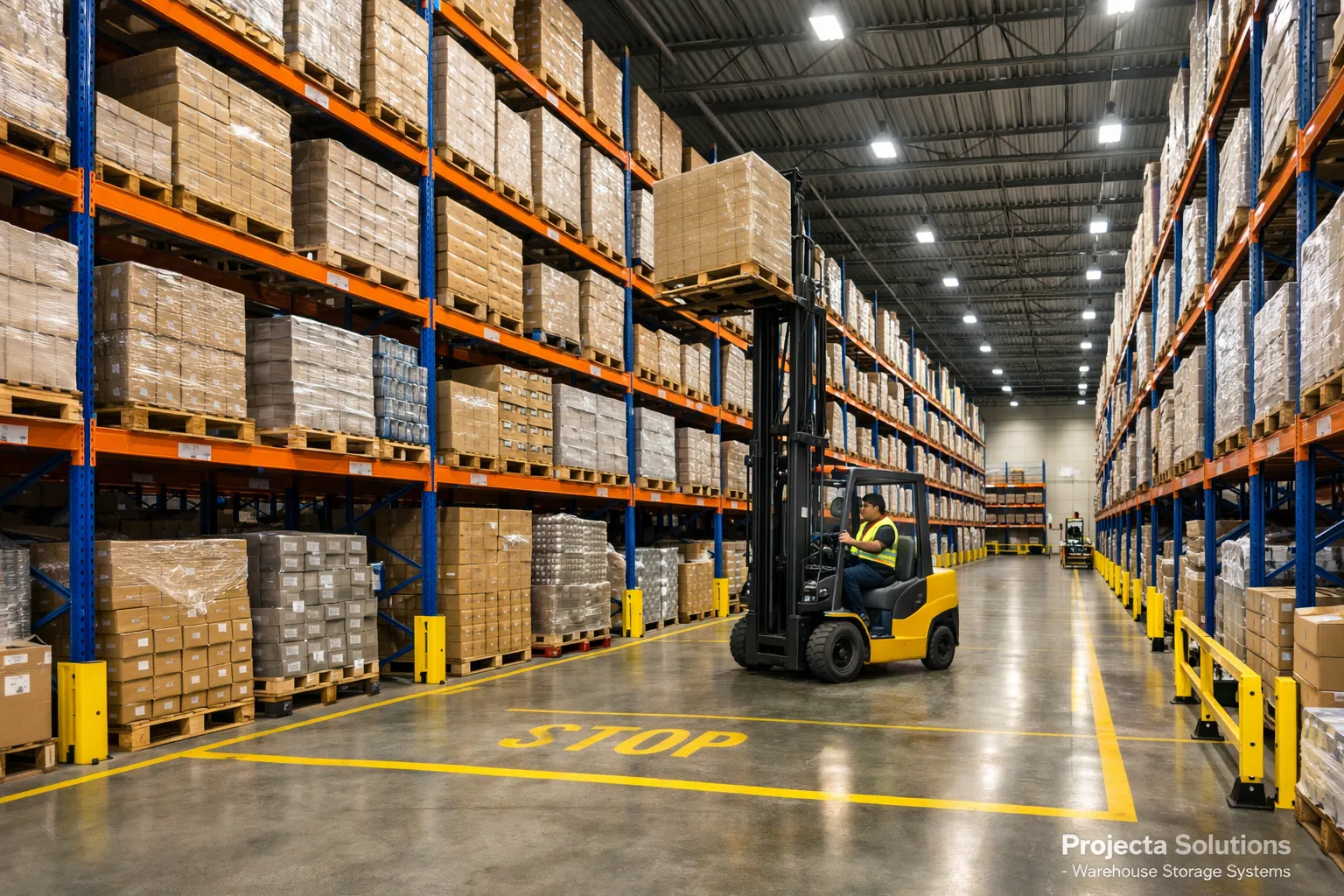
Warehouse space planning focuses on maximizing the use of available storage capacity without compromising safety or accessibility. Many facilities underutilize vertical storage space, resulting in inefficient use of valuable warehouse square footage.
Through effective warehouse space planning, consultants analyze storage requirements and design systems that use both floor space and vertical space efficiently.
A well-designed warehouse often includes several types of storage systems depending on product characteristics.
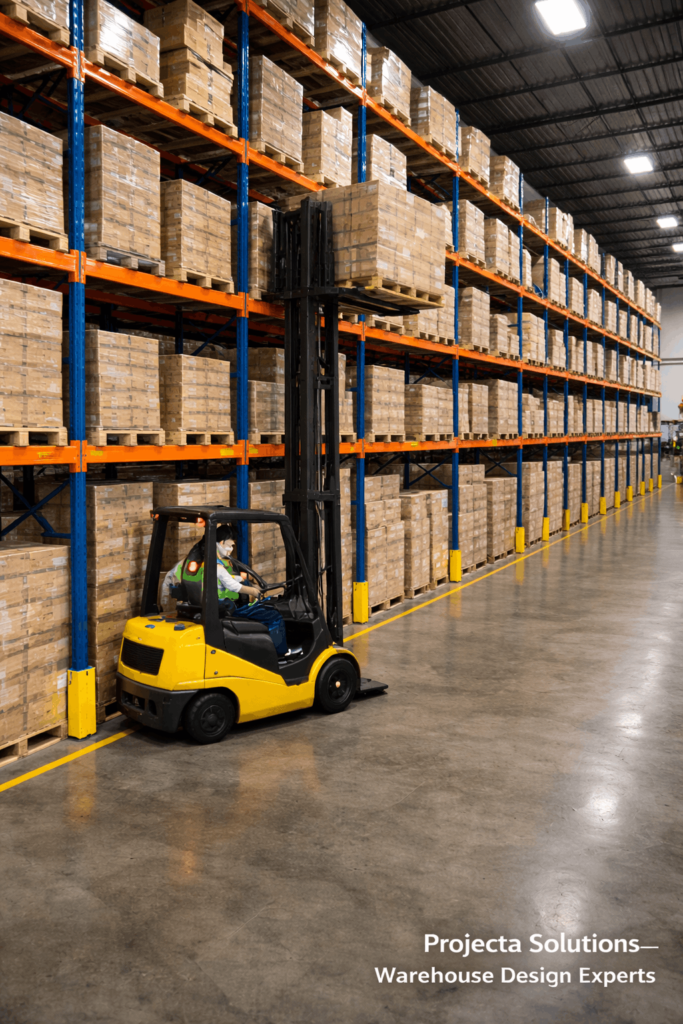
Pallet Racking Systems
Selective pallet racks are one of the most common storage solutions used in warehouses. They allow direct access to each pallet and support organized inventory management.
High-Density Storage Systems
Systems such as drive-in racks or push-back racks allow warehouses to store more pallets in the same footprint by reducing aisle space.
Cantilever Racks
Cantilever racks are commonly used for storing long or bulky materials such as lumber, pipes, and steel beams.
Mezzanine Platforms
Mezzanines add additional storage levels within the warehouse by creating a second floor above existing storage areas.
Through strategic warehouse storage design, consultants select storage systems that align with inventory characteristics, order picking methods, and operational workflows. This planning allows companies to increase storage capacity without expanding their facility.
Distribution Center Layout Design Principles
Distribution centers operate differently from traditional warehouses. Instead of focusing on long-term storage, distribution centers prioritize the rapid movement of goods through receiving, sorting, picking, and shipping processes.
Effective distribution center layout design ensures that products move through the facility with minimal handling and minimal delays.
Key design factors include dock door placement, staging areas, picking zones, and packing stations. Receiving and shipping areas must be positioned to reduce travel distance and streamline product flow.
Cross-docking operations may also be included in distribution center layouts. In these systems, products move directly from inbound trucks to outbound shipments without being stored long-term.
Proper layout planning allows distribution centers to process large volumes of inventory quickly while maintaining operational accuracy and efficiency.
Warehouse Workflow Optimization Strategies
Even with the right storage systems in place, inefficient workflows can reduce warehouse productivity. Warehouse workflow optimization focuses on improving how workers, equipment, and products move throughout the facility.
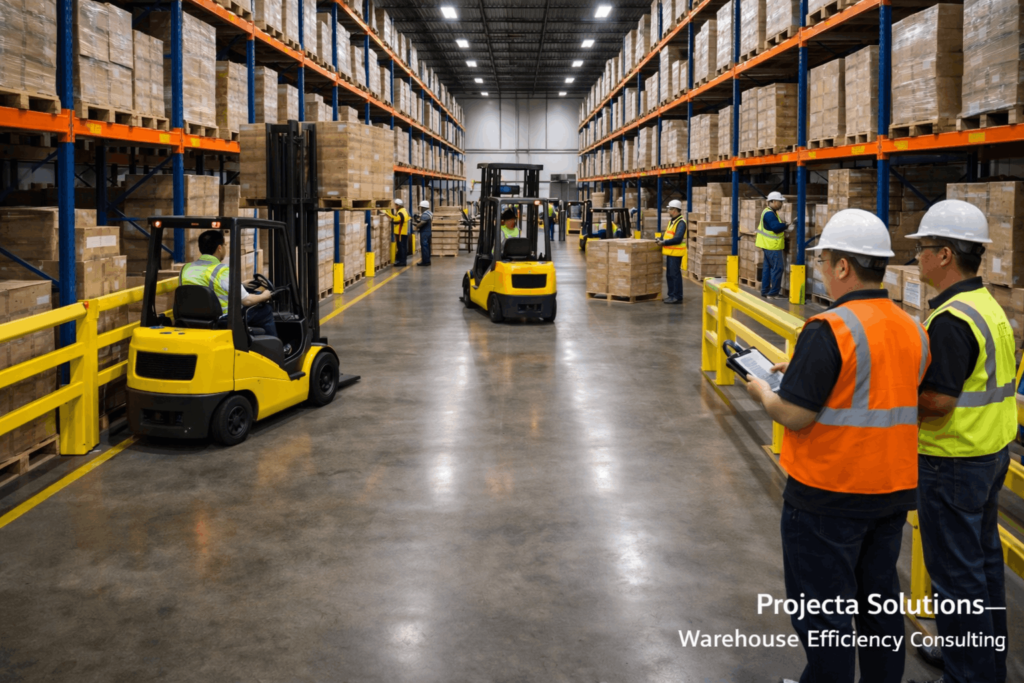
One common improvement strategy involves reducing travel distance for picking operations. Warehouse managers should store frequently ordered items in easily accessible locations to minimize worker movement.
Another important strategy is logical product slotting. By grouping related items together, warehouses can improve order picking efficiency and reduce errors.
Separating forklift traffic from pedestrian pathways is also an important safety and efficiency practice. Dedicated equipment lanes reduce congestion and lower the risk of workplace accidents.
Warehouse workflow optimization may also include redesigning picking routes, reorganizing storage zones, or implementing better inventory tracking methods. When businesses apply these improvements effectively, they increase warehouse throughput and reduce operational delays.
Warehouse Efficiency Consulting for Operational Improvement
Warehouse efficiency consulting focuses on identifying operational inefficiencies and developing solutions to improve productivity. consultants warehouse review existing processes and analyze operational data to identify areas for improvement.
Key areas typically evaluated during warehouse efficiency consulting include:
- Storage utilization and space allocation
- Order picking processes
- Inventory organization
- Labor productivity
- Equipment usage and workflow patterns
Through detailed analysis, consultants can recommend layout adjustments, storage upgrades, or process improvements that support faster operations.
Improving warehouse efficiency often leads to measurable benefits such as reduced operational costs, faster order fulfillment, and improved inventory accuracy. These improvements can significantly impact a company’s supply chain performance.
Benefits of Hiring a Warehouse Design Company in Texas
Businesses operating warehouses in Texas face unique logistics challenges. High inventory volumes, growing distribution networks, and expanding industrial facilities require careful planning and optimization.
Working with an experienced warehouse design company in Texas offers several advantages.
Professional consultants understand regional logistics infrastructure and warehouse construction requirements. They can design facilities that support both current operational needs and future growth.
Expert warehouse design also helps businesses avoid costly mistakes such as inefficient layouts, poorly positioned storage systems, or inadequate workflow planning.
By investing in professional warehouse consulting services, companies can improve space utilization, increase operational efficiency, and create safer working environments for employees.
Contact Projecta Solutions for Warehouse Design and Layout Consulting
Businesses looking to improve warehouse operations often benefit from working with experienced consultants who understand storage systems, facility planning, and logistics workflows.
Projecta Solutions provides warehouse design and layout consulting services for warehouses and distribution centers across Texas. The company works with businesses to plan efficient storage systems, optimize warehouse layouts, and improve operational performance.
Services provided by Projecta Solutions include warehouse layout planning, storage system design, racking system installation, and warehouse workflow optimization. Their team collaborates closely with clients to create solutions that maximize storage capacity and support efficient inventory management.
Whether your company is building a new warehouse, expanding an existing facility, or improving operational efficiency, professional warehouse consulting can make a significant difference in long-term performance.
Contact Projecta Solutions to discuss warehouse design and layout consulting services and learn how optimized warehouse planning can support your business growth.