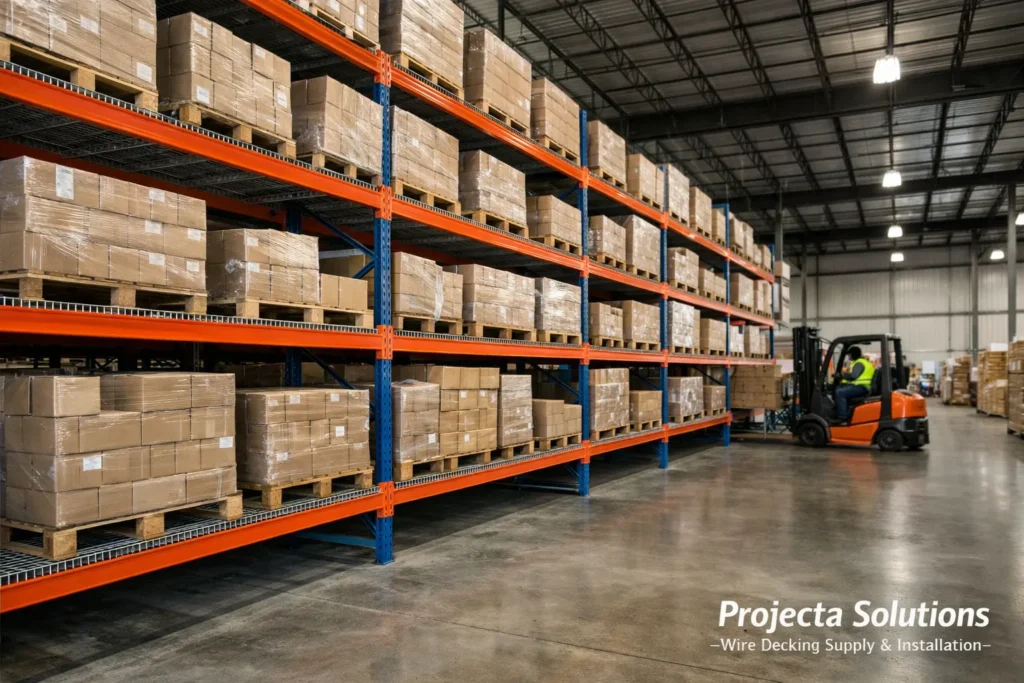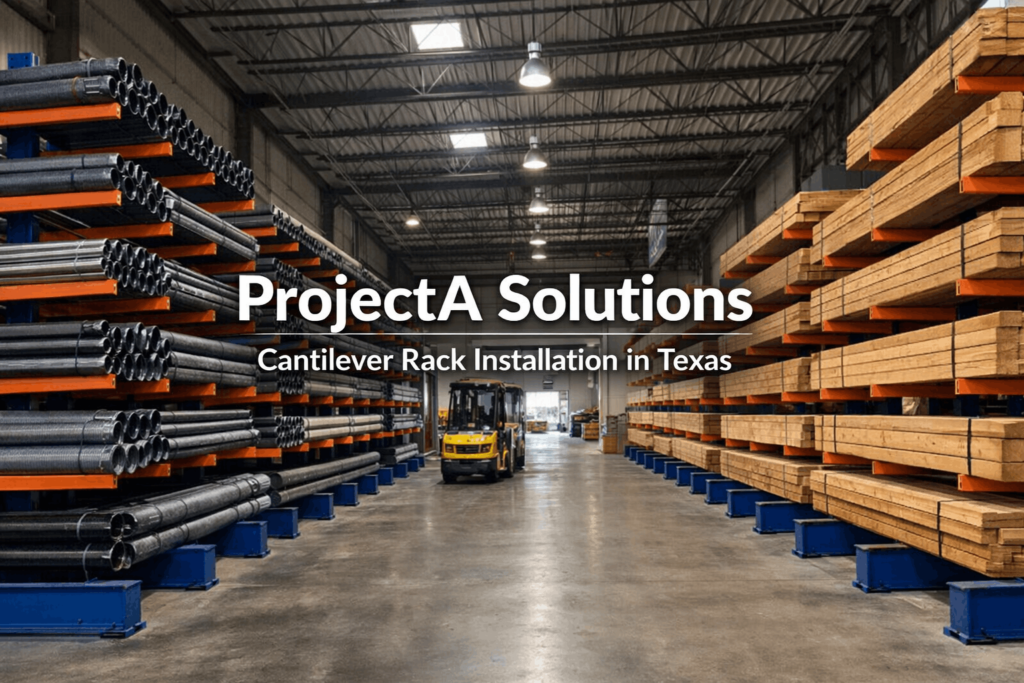
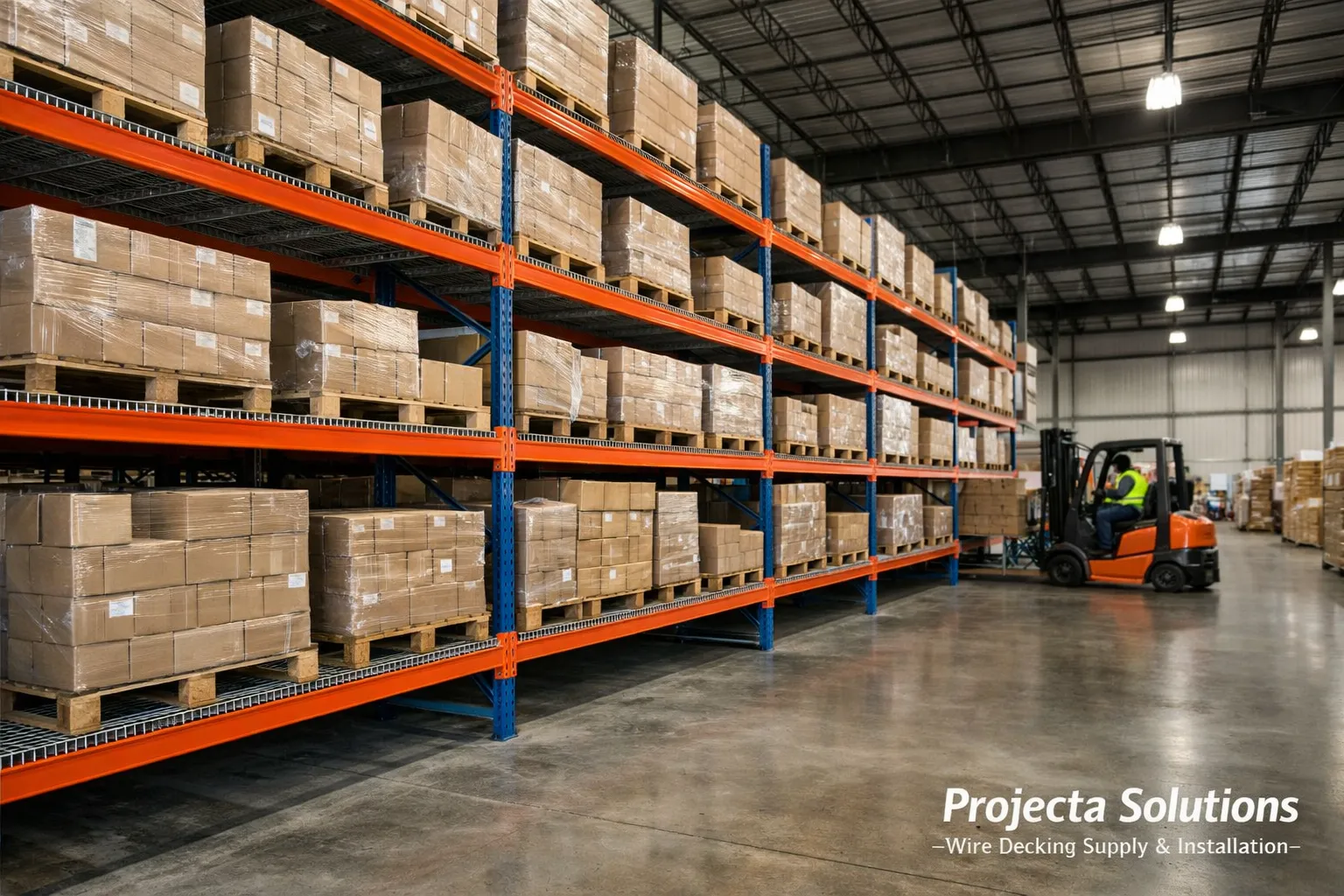

Drive-through racking is one of the storage techniques that has gained popularity among warehouses of the modern world that have to be able to use the maximum space without compromising the stability and safety. Drive-through racking systems enable high-density layouts to be formed by allowing forklifts to access deep storage lanes, thereby increasing pallet capacity and supporting organized bulk storage.
In Texas and Florida, whether in Dallas-Fort Worth and Houston, or in Miami and South Florida, there are warehouses that use the drive-through rack systems to manage the increasing inventory levels and the escalating real estate prices. Selecting the right pallet racking system and working with a professional pallet rack installer ensures layouts remain efficient, compliant, and ready for long-term expansion.
Projecta Solutions offers warehouse layout design, AutoCAD drawing support, and professional racking installation services to design and develop reliable drive-through racking systems that improve storage density, safety, and operational performance.
What Is Drive Through Racking and How It Works
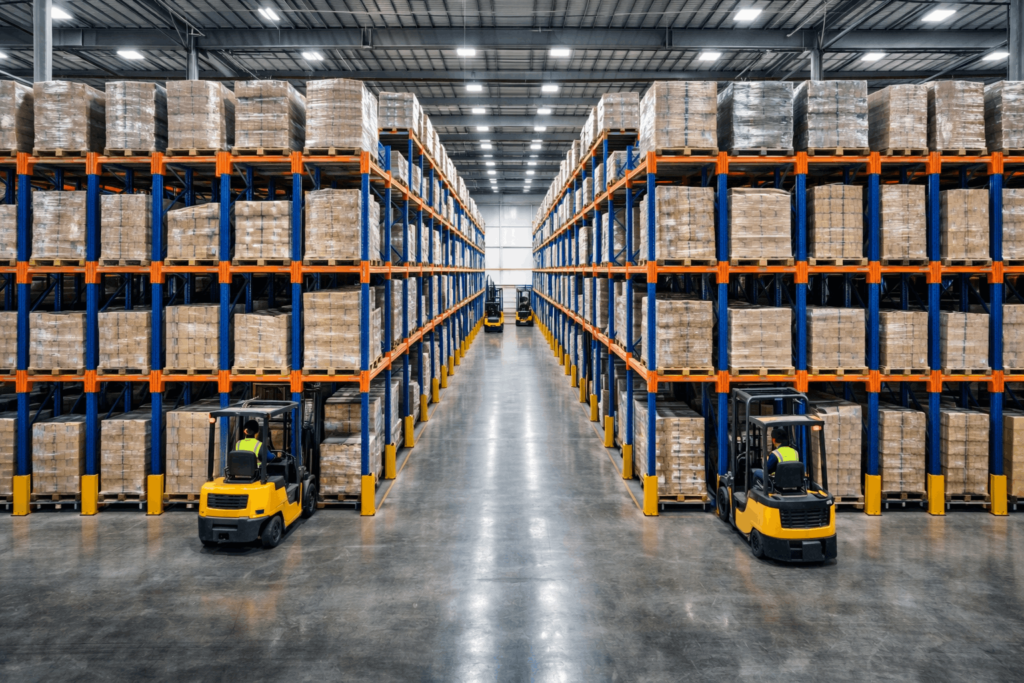
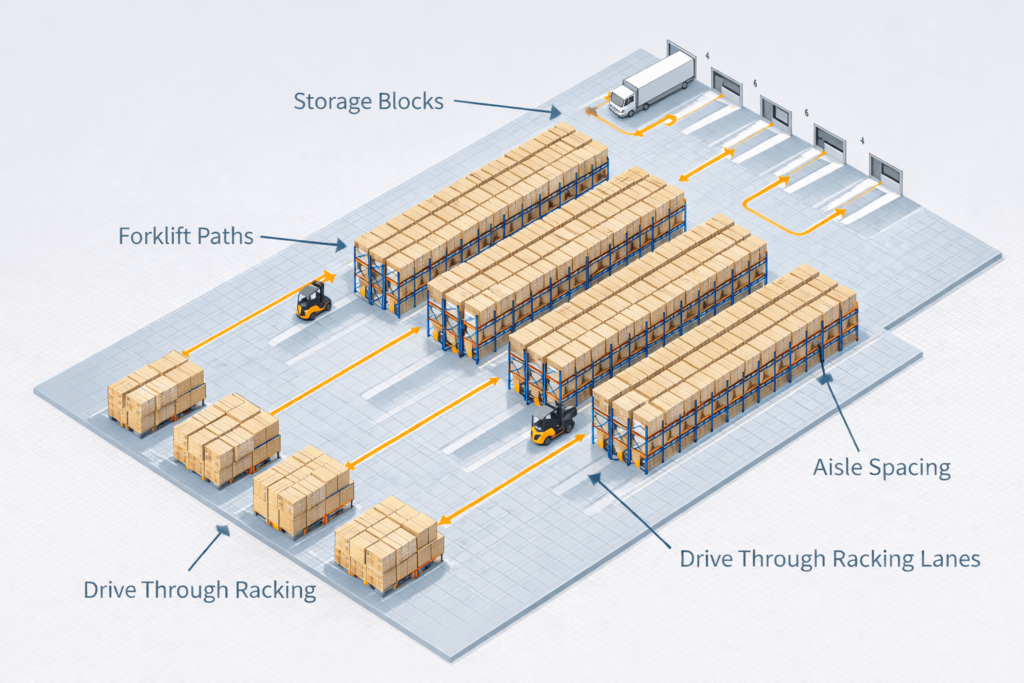
Drive-through racking minimizes aisles and maximizes the number of pallets by using a high-density storage system. Rather than retrieving pallets at the front side of the rack, forklifts enter the storage lanes to deliver and collect loads.
This design removes the need to have several aisles in a warehouse, which enables it to accommodate additional pallets on the same floor. The system is most suited for high-volume operations of similar or related products where rotation speed is not a critical factor as compared to storage volume.
Drive-through racking is the key storage solution in a lot of cold storage and food distribution settings due to its high capacity and ability to keep the lanes in order.
Basic Design of Drive-Through Rack Systems
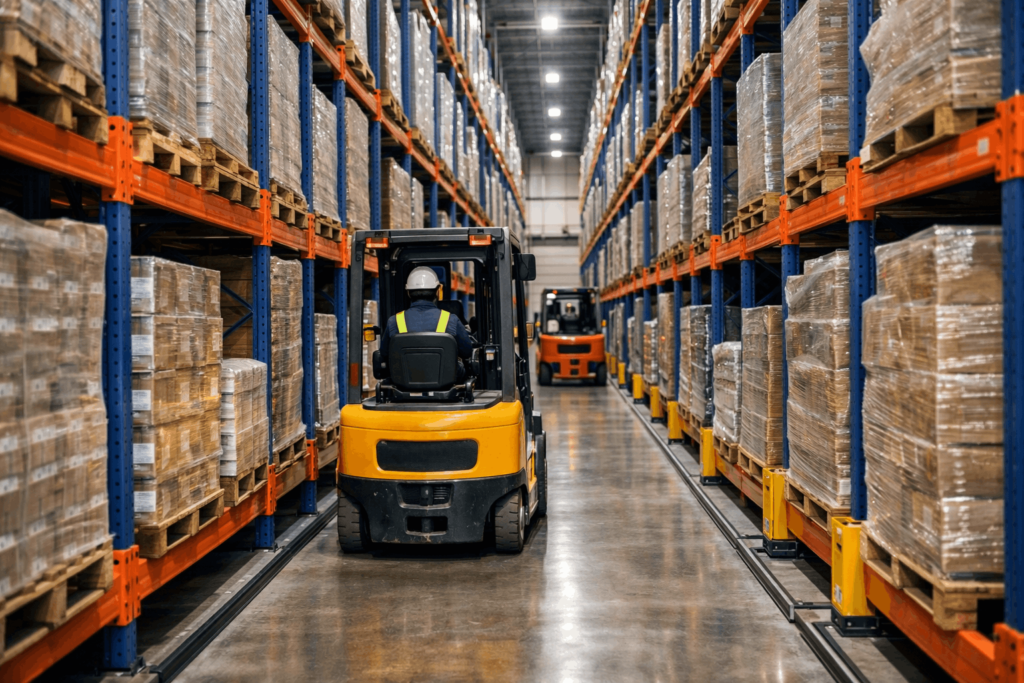
Drive-through rack system involves upright frames, horizontal rails, and guide structures that hold pallets without the use of the traditional front-facing beam. Pallets are placed on side rails on the lanes of the rack instead of resting on beams.
In each lane, a number of pallets can be stacked in a deep stack, which creates small storage blocks and minimizes waste aisles. The rack depth, height, and lane width are adjusted depending on the size of the pallets, the type of forklift, and the weight of the load.
This modular design also enables facilities to construct dense storage blocks, which still ensure predictable access routes and load support.
How Forklifts Operate Inside Drive-Through Racking
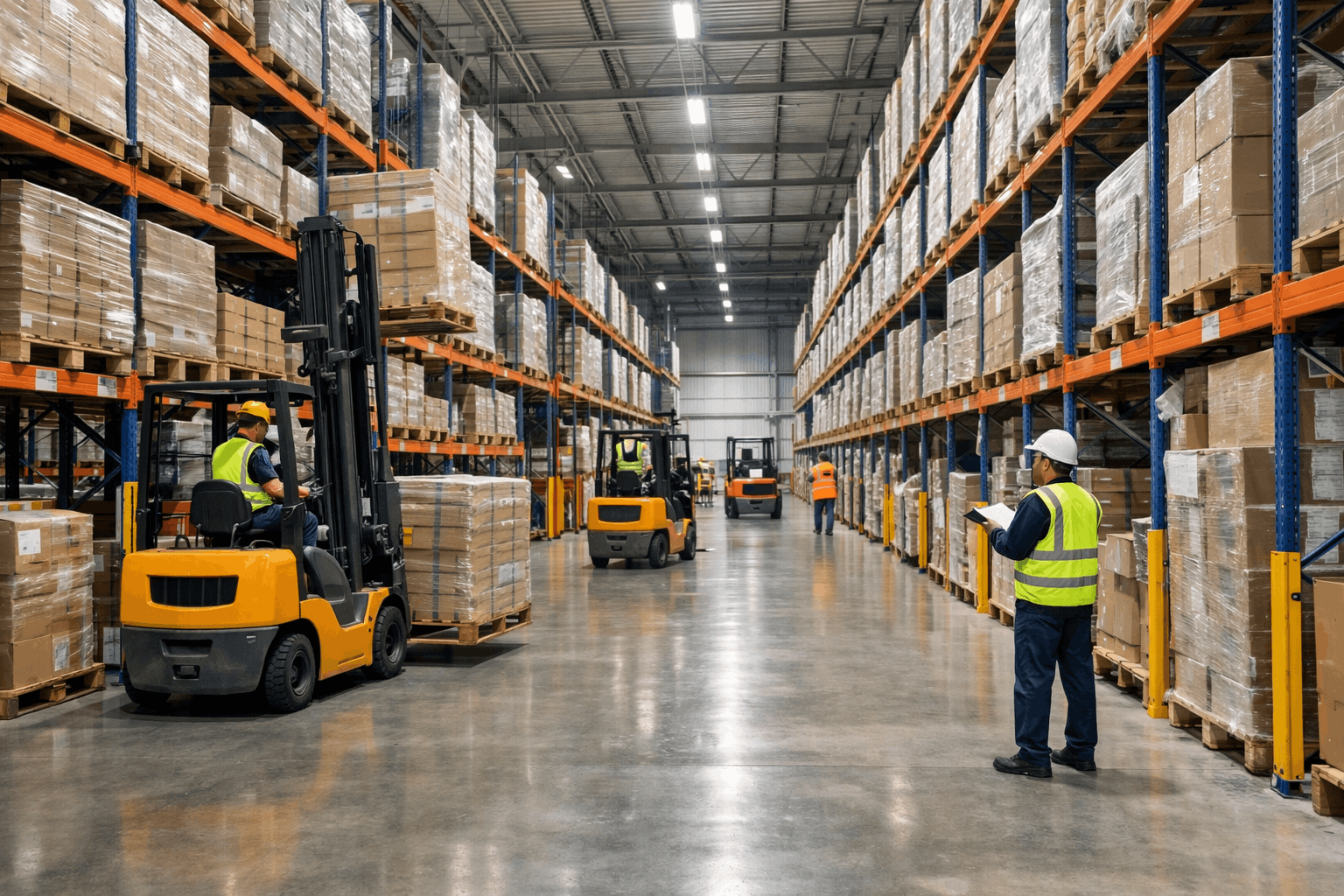
The operators of the forklifts come into the rack lanes to stack pallets on the side rails. In the reunion of inventory, they drive backwards out of the lane carrying the pallet.
The majority of drive-through racking systems are mostly based on last-in, first-out (LIFO) systems. This is why they are suited to bulk storage, buffer stock, seasonal inventory, and frozen goods, whereby stock rotation is not as important.
Training of the operators and distinct line markings is necessary since forklifts are used within enclosed rack systems where visibility and clearance are compromised.
When Drive Through Racking Is the Right Choice
Drive-through racking is effective when:
- You store large quantities of the same product.
- You want to maximize storage density.
- You have limited floor space.
- You operate cold storage or bulk storage facilities.
- Inventory turnover is predictable.
A lot of cold storage warehouses in Texas and food distribution centers in Florida use drive-through rack systems to store large amounts of goods and maintain the correct level of temperature and control expenses.
Benefits of Drive Through Racking for Modern Warehouses
When applied correctly, drive-through racking has a number of operational and financial benefits.
Maximizing Storage Density in Limited Space
Storage density is the main advantage. Drive-through racking can increase pallet capacity by 60–75 percent over selective racking by removing aisles between stacked rack rows.
This benefit in dense markets such as Miami, Houston, and Dallas-Fort Worth is that warehouses are able to increase storage capacity without necessarily adding land or constructing new buildings.
Increased density also lowers the heating, cooling, and lighting expenses per pallet location.
Ideal Applications for High-Volume Storage
Drive through racking suits operations that:
- Handle uniform pallet sizes
- Store palletized goods in bulk
- Operate freezer or refrigerated facilities
- Maintain seasonal inventory
- Use batch production cycles.
The advantage of such environments is that there is predictable lane usage, which means there are fewer trips taken.
Common Industries Using Drive Through Racking
In Texas and Florida, drive-through racking is common in:
- Frozen food warehouses
- Produce distribution centers
- Beverage bottling plants
- Dairy and meat processing facilities
- Packaging and manufacturing buffer storage
These businesses have an interest in space efficiency, uniform storage facilities, and consistent pallet processing.
Drive Through Racking vs Other Pallet Racking Systems
The selection of the proper storage system requires an understanding of the differences between drive-through racking and other pallet racks in the warehouse.
Drive Through Rack vs Selective Racking
Selective racking gives easy reach to all the pallets and the highest level of flexibility. It is suitable for mixed SKUs and high pick rates.
Selective systems, however, involve a large number of aisles and consume a lot of floor space. Drive-through racking has less access speed in favor of substantially higher storage density.
Drive-through racks can be better space planners and decrease long-term costs, especially when it comes to bulk storage.
Drive Through Rack vs Push Back Racking
IT push back racking is more dense than a selective system and faster than a drive-through racking. It automates the pallet staging using rolling carts or rails. Although push-back systems are good in performance, they are normally more expensive and have less in-depth capacity. When the main aim is to achieve maximum density, drive-through racking is the ideal choice.
Choosing the Best System for Your Warehouse
The best choice depends on:
- Inventory turnover rate
- Product variety
- Pallet weight and size
- Building layout and height
- Forklift traffic patterns
At Projecta Solutions, we examine the workflow, growth strategies, and space requirements and recommend a racking system.
Planning a Drive-Through Racking Installation
A successful drive-through racking delivery is based on thorough planning.
Evaluating Warehouse Space and Building Limits
Rack layout is influenced by the ceiling height, distance between columns, fire protection systems, the location of lighting, and the location of dock doors. Deeper lanes and broader aisles may be possible in Texas warehouses of a large footprint. The major advantage of facilities with a small floor area in Florida is vertical height. The design should also include fire suppression requirements and sprinkler clearances.
Load Capacity, Pallet Size, and Rack Depth
Upright selection and spacing between rails are dependent on pallet weight, size, and stacking patterns. Improper sizing causes imbalance of loads, disproportionate stress, and excessive rack wear. Dynamic forklift forces should be taken into account, and the weight of pallets should be considered as a static one.
Traffic Flow and Forklift Clearance Requirements
The turning radius of the forklifts, the mast height, the visibility of the operator, and the width of the lane should be designed. Well-defined traffic routes result in fewer crashes, enhanced efficiency, and reduced destruction. Proper flow patterns also minimize operator fatigue and handling time.
Drive Through Racking Installation Process
Professional racking installation is an organized process of installing racks in order to be precise and safe.
Site Preparation and Floor Condition Requirements
There should be standards of flatness and strength of concrete floors. Rough surfaces are associated with misalignment, anchor stress, and distortion of the lanes. The anchor point is placed according to engineered drawings and subjected to slab tolerances.
Frame Assembly and Rail Installation
Frames are put up upright with horizontal rails and pallet supports installed afterwards. Alignment is critical. The slightest deviations may lead to pallet binding, imbalanced loading, and forklift interference.
Anchoring, Alignment, and Safety Checks
Frames are anchored to the slab, and the rack motion is prevented. Final inspection ensures plumb alignment, rail spacing, load labeling, and clearances. At Projecta Solutions, the AutoCAD drawings would facilitate the installer in accurate positioning, anchor layout, and coordinating inspection.
Safety and Compliance for Drive Through Racking
Drive-through racking systems have an increased risk of impact because of forklift entry within the rack lanes.
Load Labels and Capacity Requirements
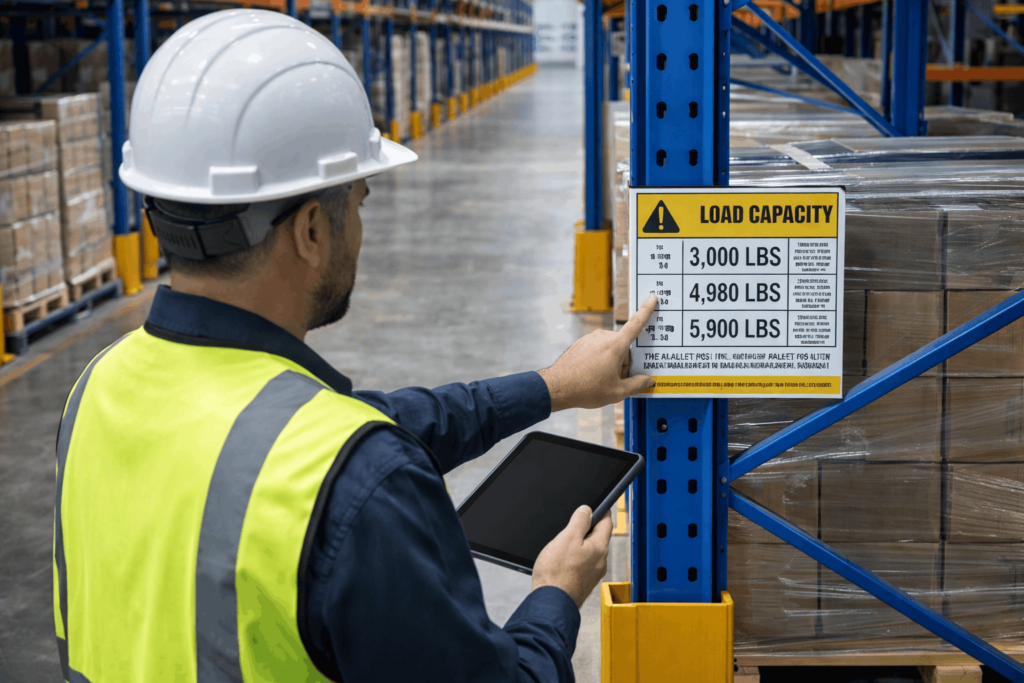
Load capacity labels with maximum pallet weight and upright ratings should be put in each lane. Lost or old labels pose severe compliance consequences when it comes to OSHA inspection and insurance inspections.
Rack Protection and Impact Prevention
Column guards, end protectors, and guide rails prevent the impact of forklifts on frames. These accessories greatly increase rack life and lower the cost of maintenance in the high-traffic setting.
Inspection and Maintenance Best Practices
Periodic monitoring discovers:
- Bent uprights
- Damaged rails
- Loose anchors
- Misaligned lanes
- Missing hardware
A high number of the Dallas-Fort Worth and South Florida warehouses use the quarterly or pre-peak season inspections.
Choosing a Professional Pallet Rack Installer
Special training and experience are needed for drive-through racking installation.
Why Professional Installation Matters
Poor installation causes misalignment, lower capacity, and a high risk of collapsing. Pallet rack installers are professional, and they know how to load the structure, where to put the anchors, the dynamics of forklifts, and the standards of inspection.
Experience With Drive Through Rack Systems
Not every installer is a specialist in high-density systems. Select teams that have a history of experience in drive-through racking installation and safety compliance.
Permits, Drawings, and Engineering Support
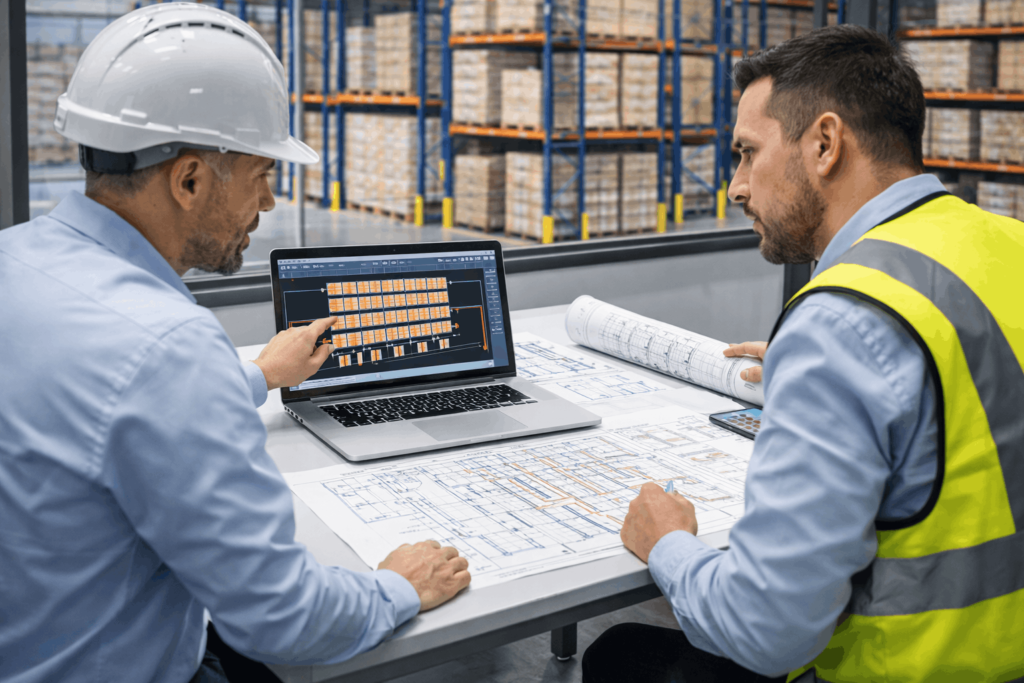
In numerous jurisdictions, stamping of drawings and approval of approvals are done. At Projecta Solutions, we offer AutoCAD layouts, which assist in the permitting, fire reviews, and final inspections.
Drive Through Racking Installation in Texas and Florida
Local knowledge enhances performance and compliance.
Serving Warehouses Across Texas
We support projects in:
- Dallas–Fort Worth
- Houston
- Austin
- San Antonio
Warehouses in Texas focus on wide aisle flow, heavy loads, and efficient use of ceiling height.
Supporting Florida Distribution Centers
We serve:
- Miami
- Hallandale Beach
- South Florida
Vertical density, hurricane-rated anchoring, and fire protection coordination are the priorities of Florida facilities.
Local Code, Permits, and Inspection Support
Our drawings support:
- Fire marshal approvals
- Building permits
- OSHA inspections
- Insurance compliance
How Projecta Solutions Supports Drive Through Racking Projects
Projecta Solutions offers full services to warehouse racking projects.
Warehouse Layout and Storage Planning Services
We consider workflow, inventory, and growth plans as a way of improving layouts in order to achieve the maximization of capacity without compromising safety.
AutoCAD Drawings and Installation Coordination
We draw rack location, aisle separation, lane depth, anchoring location, and load areas.
Turnkey Support From Planning to Final Inspection
We organize promotions, permits, installation advice, and inspection arrangements to ensure the successful delivery of the project.
Frequently Asked Questions About Drive Through Racking
What is the purpose of drive-through racking?
Warehouses use drive-through racking for high-density bulk storage in cold storage, food distribution, and manufacturing facilities.
What is the cost of a drive-through rack installation?
The prices differ depending on height, depth, slab condition, and scope of installation. The right design manages the long-term costs.
Can drive-through racks be used in high-density storage?
Yes, provided in a properly designed, installed, guarded, and regularly inspected.
Do you have a drive-through rack in Texas and Florida?
Projecta Solutions is a facilitator of racking projects in Texas and Florida, and Dallas-Fort Worth, Houston, Austin, San Antonio, Miami, and Hallandale Beach.
What is the duration of installation of the racking?
Project teams complete most projects within a few days to several weeks, depending on the system size.
Importance of Proper Planning
Proper planning prevents layout mistakes, lane misalignment, and capacity failures. In the case of warehouses located in Texas and Florida, considerate drive-through racking design is the way to grow in the long run and be stable in terms of operations.
Safety and Efficiency
Safe racking covers inventory and workers. Well-designed layouts minimize the travel time, congestion, and operation costs.
Contact Projecta Solutions
Projecta Solutions can install drive-through racking in Texas or Florida. We serve warehouses in Dallas–Fort Worth, Houston, Austin, San Antonio, Miami, and Hallandale Beach by providing efficient planning, accurate AutoCAD drawings, and consistent execution.